AEP vs. Traditional Hoof Care
A look at why Applied Equine Podiatry offers more than just a trim.
When it comes to hoof care, most horse owners are familiar with two options: traditional farrier work (usually involving shoes) or barefoot trimming. But there’s a third option — one that’s gaining attention for its focus on internal function, not just appearances.
That option is Applied Equine Podiatry (AEP) — and it’s a game-changer for horses of all ages, breeds, and disciplines.
So what makes it different?
Traditional Hoof Care: A Quick Overview
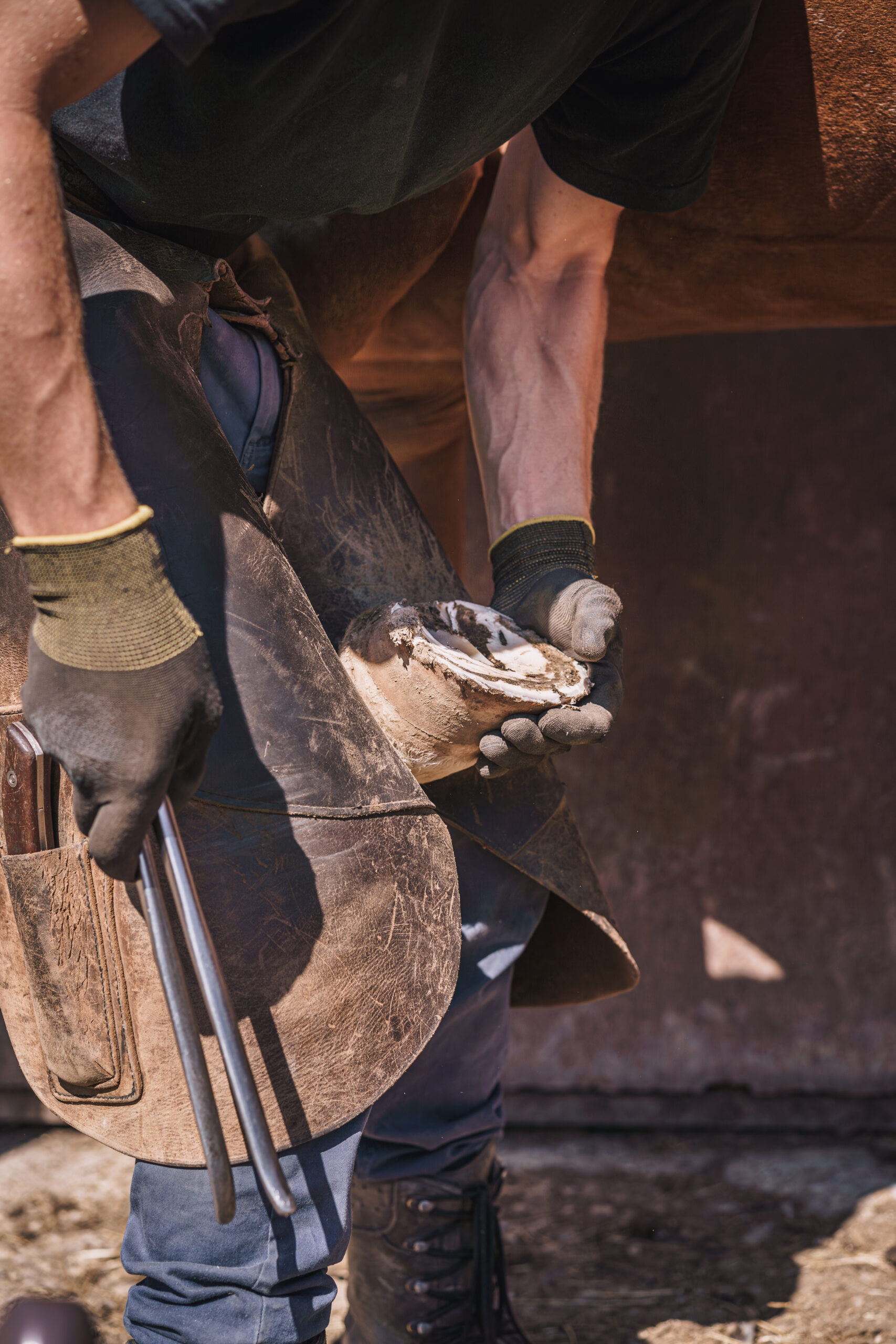
In most conventional trimming or shoeing routines, the farrier:
This approach has been used for centuries — and it works for many horses. But it primarily focuses on external hoof shape, without always considering what’s going on inside the foot.
AEP: A Whole-Foot Method
Applied Equine Podiatry is more than a trim style — it’s a science-informed method that looks at:
It’s about understanding how the hoof capsule (outer shell) relates to the internal structures (like the coffin bone, connective tissue, and digital cushion).
Using these insights, an AEP-trained farrier applies the High Performance Trim (HPT) to realign and rebalance the foot — supporting better circulation, comfort, and long-term soundness.

Think Function, Not Just Form
The goal of AEP isn’t just to make the hoof look good — it’s to make sure the foot functions as nature intended.
That means:
In contrast, traditional methods may sometimes mask internal problems or unintentionally create new ones — especially if the shoeing or trim doesn’t match the horse’s actual internal balance.
Is AEP Right for Your Horse?
You don’t have to wait until your horse is lame to benefit from AEP.
This method is ideal for:
Applied Equine Podiatry doesn’t throw out everything traditional farriery offers — it builds on it. It adds observation, science, and strategy to make hoof care more than maintenance… it makes it a partnership.
If you’re looking for a better understanding of your horse’s foundation, AEP gives you the tools to go deeper.