
Hoof Abscesses: Detox or Damage?
A balanced view on one of the hoof’s most misunderstood warning signs.
If you’ve ever seen a horse suddenly limp or favor one leg, you might suspect a hoof abscess. It’s one of those common equine issues that can sweep through barns with drama and urgency — leaving horse owners worried, confused, and reaching for Epsom salts.
But what’s really happening inside that hoof?
And is an abscess just a short-term nuisance — or a sign of something deeper?
Let’s break it down.
What Is a Hoof Abscess, Really?
Imagine a tiny, painful pocket of infection trapped between the soft, sensitive structures of the foot and the rigid outer hoof wall. That’s an abscess: a pressure-filled response to bacteria, often caused by a crack, puncture, or imbalance in the hoof that compromises the natural barrier.
The result?
It’s not just a sore spot — it’s an internal battle being waged in a space with nowhere for swelling to go.
Detox or Damage? The Debate Explained
Some natural hoof care communities describe abscesses as a kind of detox — the body purging toxins or correcting imbalance. And there’s some truth to that. When hoof function is restricted (due to imbalance, compression, or lack of proper movement), circulation is compromised. That means waste products can’t exit the way they’re supposed to.
So yes — abscesses can be the body’s way of pushing out what shouldn’t be there. But that doesn’t make them harmless.

From a clinical standpoint, an abscess is still inflammation and infection — and it needs attention. Left untreated, it can spread deeper, rupture poorly, or create chronic issues. The AEP approach looks at both sides.
This can be triggered by:
The AEP approach views the foot as a dynamic, living structure. If its internal balance is off, and circulation is compromised, waste can’t exit normally. Abscesses become the “emergency exit.”
Why Recurrent Abscesses Are a Red Flag
One abscess might be circumstantial — but repeated episodes mean the foot isn’t functioning properly. It’s a call to action, not just a call to soak and bandage.
These are the questions we ask in AEP-based care.
How AEP Helps Prevent Recurrence
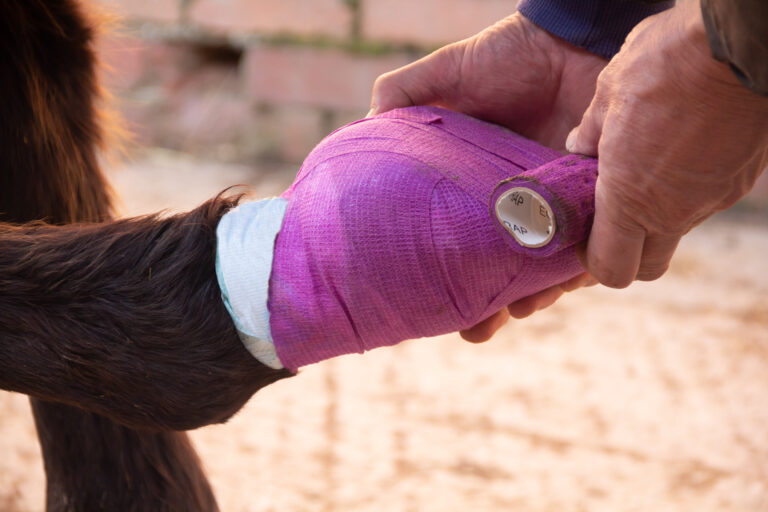
With balance-focused trimming, movement-based rehab, and supportive tools (like Perfect Hoof Wear™ wraps), we work to restore healthy hoof function and eliminate the conditions that lead to abscesses.
Instead of chasing symptoms, we treat the whole hoof as a system — and help it work with the body, not against it.

We don’t just treat the abscess — we remove the reason the body needed one.
Abscesses may be common, but they’re not “normal.” They’re a message from your horse — one we shouldn’t ignore.
With the right balance, support, and stimulus, we can help the foot function naturally — and prevent the next blowout before it starts.
That’s where real, lasting change begins — from the inside out.
If you’d like to better understand the difference between acute and chronic hoof abscesses, including what causes recurring abscesses and what to expect during healing, read our in-depth guide on acute vs. chronic hoof abscesses in horses.
Want to learn more about how Applied Equine Podiatry (AEP) can support your horse’s hoof health? Reach out for a consultation or explore our educational resources to better understand healthy hoof structure and function.
Remember, these little inflammations are part of the hoof’s larger ecosystem—sometimes a warning light signaling it’s time to pay closer attention.